In Rarequiste’s inbox, collectors often send a blurry photo asking: “There is a pentagram (star) in this hallmark, which country is it from?”
The answer is usually: Modern Italy.
The Italian silver hallmark system has undergone three major transformations. Understanding these stages allows you to easily date a piece, especially distinguishing between pre- and post-1934 items.
🏛️ Phase 0: The Liberty Era (1872 - 1934)
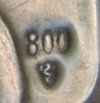
In the early years after unification, Italy did not mandate a “Lozenge Maker’s Mark”. Marks were simple. If it was 800 silver, it was often stamped with just an “800” in an oval, possibly followed by the silversmith’s full name or initials.
Dating pieces from this period is difficult due to the lack of a unified national registry.
🪓 Phase 1: The Fascist Period (1934 - 1944)
This is the darkest and rarest period in history. The Mussolini government mandated the inclusion of the Fascist party symbol—Fasces (a bundle of rods with an axe)—inside the hallmark.

- Mark Features: A Lozenge (Diamond) frame containing three elements:
- Craftsman Number: e.g.,
1. - Province Abbreviation: e.g.,
MIfor Milano. - Fasces Symbol: A tiny axe and bundle of rods located between the numbers/letters.
- Craftsman Number: e.g.,
- Collection Value: While the history is grim, silver with Fasces marks is extremely rare (many were destroyed or re-marked post-war), giving them high historical value. Early Buccellati pieces from this era are particularly prized.
🚫 Phase 2: Post-War No Star (1944 - 1968)
After WWII, Italy became a Republic, and the Fascist symbol was removed.

- Mark Features: Still a Lozenge frame, still containing the craftsman number and province abbreviation.
- Key Point: Only numbers and letters, NO STAR.
- Example:
23 MI(The 23rd silversmith registered in Milan).
⭐ Phase 3: The Modern Star (1968 - Present)
This is the mark you see on modern luxury brands like Gucci, Buccellati, and Bulgari.

- Mark Features: A Pentagram (Star) ☆ is added to the far left of the lozenge frame, representing the Italian Republic.
- Format:
☆ <Craftsman Number> <Province Abbreviation>. - Example:
☆ 1750 AR(The 1750th silversmith in Arezzo).
🌟 Legendary Case: 1 AR (UnoAerre)
In the world of Italian jewelry, one name resonates loudly: UnoAerre. The name literally translates to “1 AR”. This means it was the No. 1 Registered Silversmith in Arezzo. As Italy’s first registered gold and silver workshop, it is synonymous with high-quality chain making.
🗺️ Geographical Codes: Where is it from?
Italy has several famous jewelry centers. Recognize these abbreviations to know the origin:
- MI (Milano): Milan. Home of Buccellati. Known for ornate, textured gold work (Segrinato).
- VI (Vicenza): Vicenza. The “City of Gold”. Most Italian gold chains originate here.
- FI (Firenze): Florence. Famous for the “Florentine Finish” (hand-chiseled texture).
- AL (Alessandria): Alessandria. Home to many Bulgari workshops.
- AR (Arezzo): Arezzo. The industrial hub for modern mechanical chains.
- NA (Napoli): Naples. Southern style, often more rustic and retro.
- PA (Palermo): Palermo (Sicily).
⚖️ Purity: 800 vs 925
- 800: The absolute mainstream for vintage Italian silverware (hollowware). If you find an antique Italian bowl or tray, it is almost certainly 800.
- 925: Used mainly for modern jewelry and exports. Since Italy is a leader in Gold jewelry, their 925 silver often benefits from high-end gold-making techniques.
🔍 Quick Check: Find the Star.
- No Star = Pre-1968 (Vintage).
- With Star = Post-1968 (Modern).
- With Axe = 1934-1944 (WWII Era, Rare).